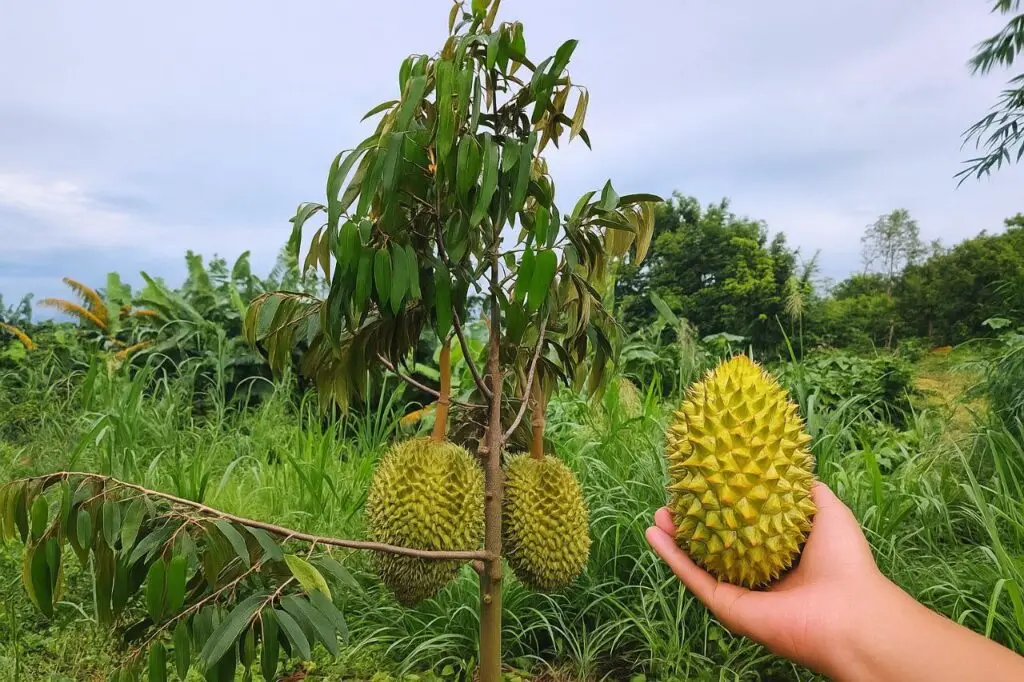
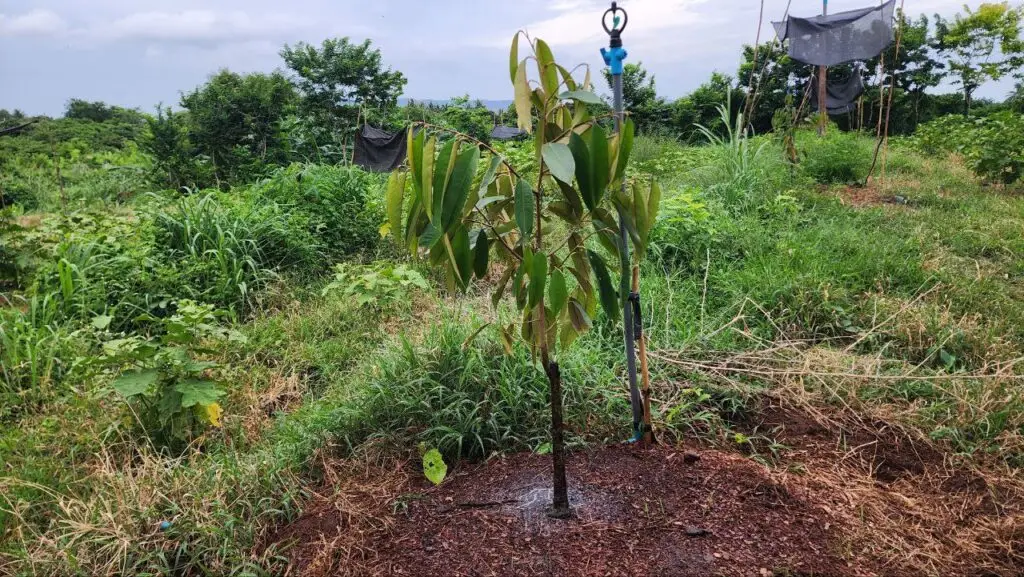
Farming is often a balance between patience and practicality. In the case of growing durians, patience is essential, as these trees take several years—typically five or more—to reach maturity and bear fruit. However, practical farmers are now adopting new approaches to make those early years more productive. One such approach is intercropping, a method that involves planting short-term crops between long-term trees. When combined with the right companion crop, intercropping becomes not only a smart farming strategy but a gateway to fast profit farming.
A promising intercrop choice is the pear-shaped eggplant. Known for its rapid growth and wide culinary appeal, this eggplant variety is gaining popularity among farmers who wish to maximize income while waiting for their main crop—young durian trees—to mature. This technique brings in multiple benefits, from immediate cash flow to improved soil health, making it a cornerstone of sustainable agriculture practices.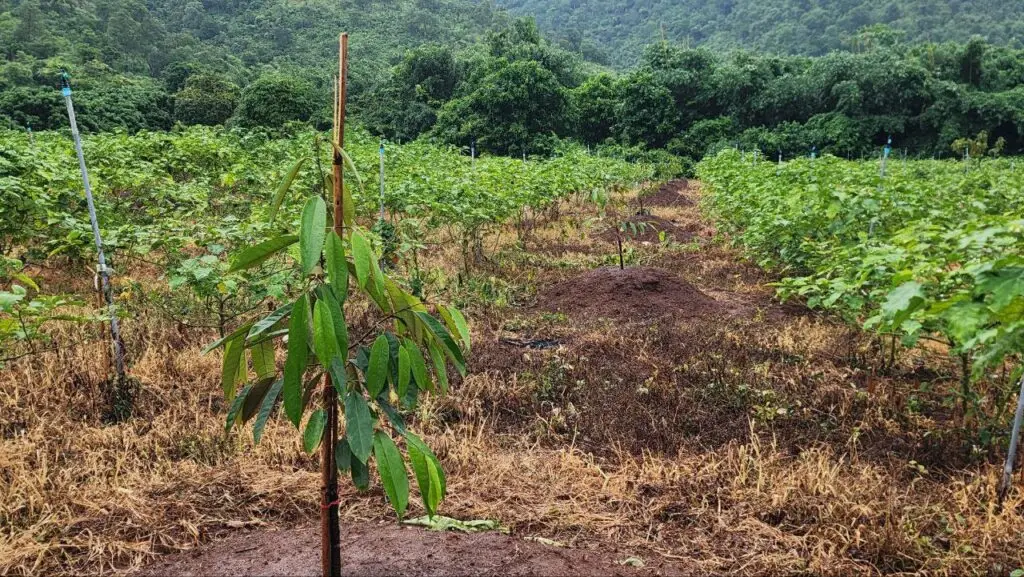
The Case for Intercropping
Intercropping is more than just planting two crops in the same field. It’s a science-driven approach that promotes biodiversity, reduces soil erosion, and makes the best use of available land. By introducing short-term crops between the rows of young durian trees, farmers not only utilize what would otherwise be idle space but also create a micro-ecosystem that supports plant health and minimizes input costs.
The space between young trees often remains underutilized. Instead of letting weeds take over or the soil dry out, planting quick-growing vegetables like eggplants fills that gap with a productive purpose. These crops are carefully spaced to avoid competition with the durian roots, ensuring that both species can thrive without hindering each other.
Why Choose Pear-Shaped Eggplants?
Among all the possible intercrops, pear-shaped eggplants offer a unique blend of speed, resilience, and profitability. They mature within 60 to 75 days, giving farmers a quick return on investment. Their compact size and dense leaf canopy also help reduce weed growth, which saves time and labor. Moreover, they are adaptable to various climates and have a consistent demand in markets and restaurants.
These eggplants are not just a filler crop—they are a serious source of revenue. With proper spacing and care, they can be harvested multiple times, providing a steady stream of income throughout the early years of durian orchard development.
Farming for Fast Profit
What makes this system a form of fast profit farming is the frequency and reliability of the harvest. While the durian trees grow slowly, the eggplants offer a short and predictable cycle. Farmers can sell the produce weekly or biweekly, helping to cover costs such as labor, irrigation, and fertilizer.
This constant income reduces financial stress and increases the flexibility of the entire farming operation. In the event of a crop failure or price drop, the farmer still has the security of another crop that is more stable and quicker to recover.
Sustainable Agriculture in Practice
Beyond profit, this intercropping model aligns with the principles of sustainable agriculture. By using natural shade from the eggplant leaves, the soil stays cooler and more moist, reducing the need for constant watering. The eggplants also provide ground cover that minimizes erosion and suppresses weeds naturally, reducing dependency on herbicides.
As the durian trees grow and begin to shade out the eggplants, farmers can transition to shade-tolerant or soil-enriching crops such as legumes or leafy greens like Brazilian spinach. These crops not only continue generating income but also support long-term soil fertility through nitrogen fixation or organic matter restoration.
Conclusion
Intercropping pear-shaped eggplants with young durian trees is a smart, strategic step for farmers who wish to combine short-term gain with long-term goals. It represents a model of fast profit farming that doesn’t sacrifice sustainability or soil health. Instead of waiting passively for durian trees to bear fruit, farmers can actively work their land, improve its condition, and earn a steady income from the very first season. This approach is more than a trend—it is a foundation for the future of sustainable agriculture in durian orchards and beyond.