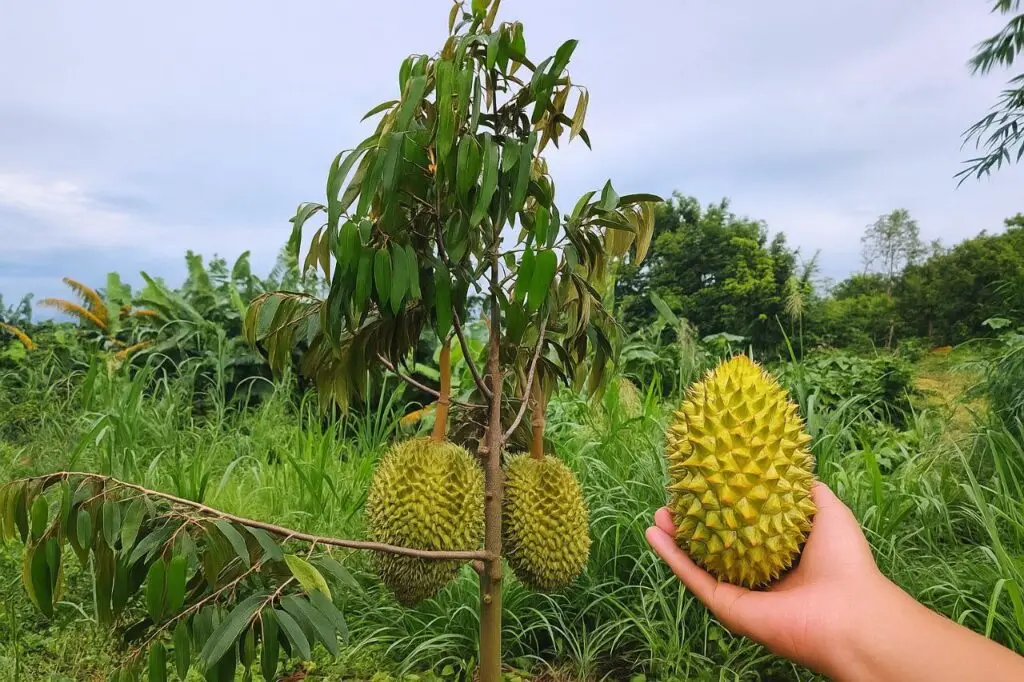
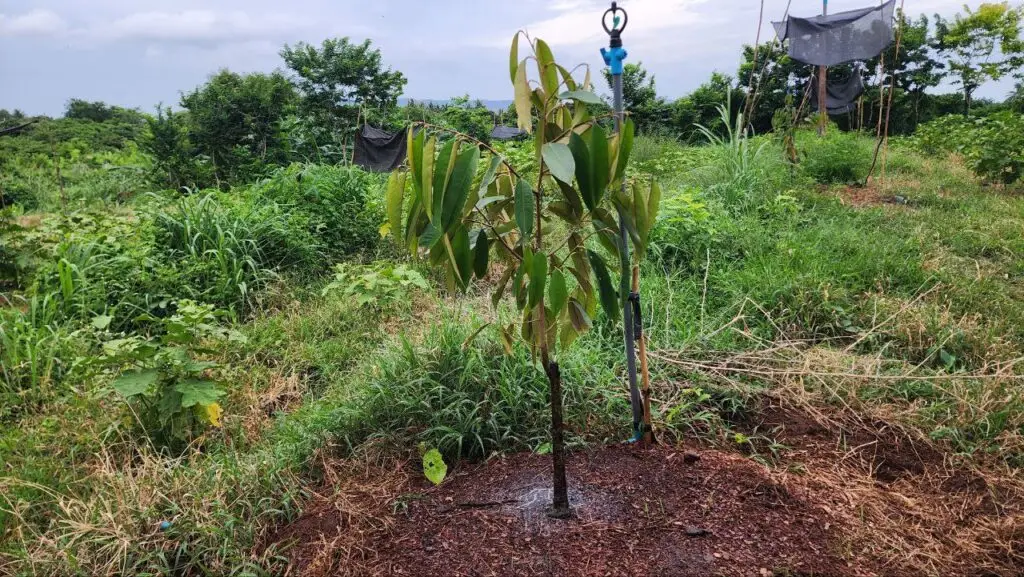
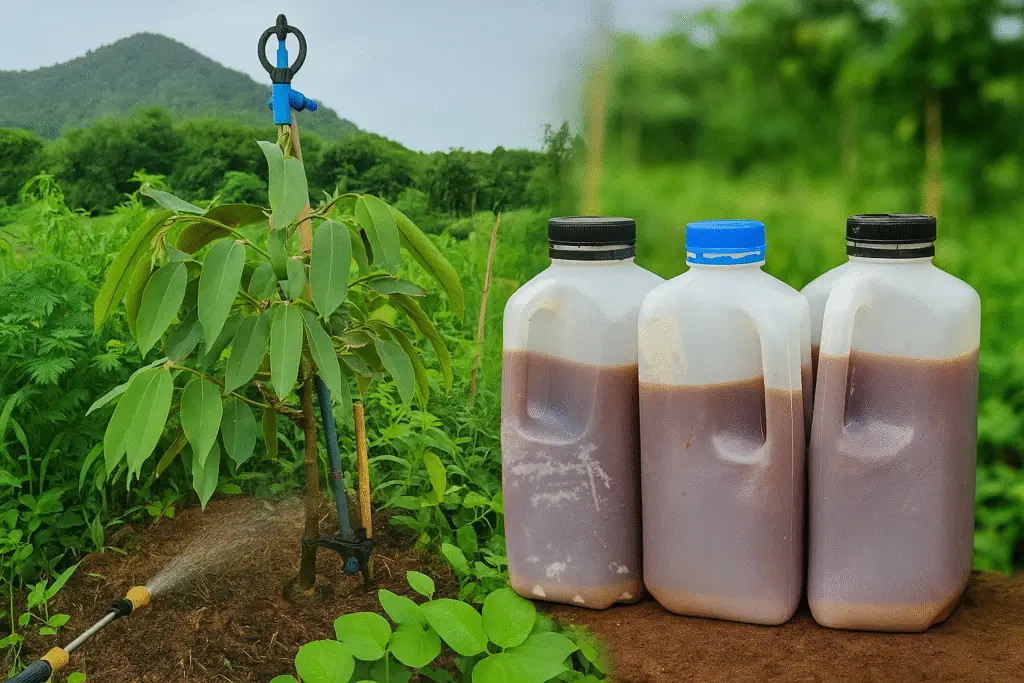
On many farms like ours, submersible pumps are the lifeline — especially during the dry season. We use deep well water every day to irrigate durian trees, vegetables, and fruit crops. But have you ever checked what’s actually in that water?
Let’s break down the real benefits, hidden risks, and smart ways to manage submersible water — using actual data from our own farm.
📊 Real Water Test from Our Farm (Deep Well)
✅ EC (Electrical Conductivity): 0.75 mS/cm = 750 µS/cm
✅ TDS (Total Dissolved Solids): 340 ppm
✅ Water drains quickly in soil after irrigation
This means the water is low to moderate in salt content, safe for daily use, but can slowly build up minerals in the root zone if not managed well.
✅ Benefits of Submersible Water (Real-Life Experience)
1. Consistent Supply, Even in Dry Season
Submersible pumps reach deep groundwater — no worries about drought. Our trees and vegetables never go thirsty, even when rain stops for weeks.
2. Naturally Filtered Water
Deep well water is cooler and cleaner than canal or surface water — fewer pathogens, less smell, and no mosquito issues.
3. Safe EC for Most Crops
With EC of 0.75 mS/cm, our water is safe for:
Durian trees
Eggplant, bitter gourd, ivy gourd
Nursery seedlings (with occasional rainwater flushing)
⚠️ Risks of Long-Term Use (What We Noticed)
Even though the water drains well, we know that:
1. Salt Accumulation Over Time
Daily irrigation = daily salt input. Minerals from water (calcium, sodium, iron) don’t evaporate — they stay in the soil and build up.
This can slowly:
2. Interaction with Chemical Fertilizer
If you add NPK too often along with submersible water, the combined salt load may be too high.
🛠️ Solutions We Use to Prevent Salt Build-Up
✅ 1. Monthly Soil EC Check
Use a simple EC meter. If runoff water from the soil reads:
We do this monthly.
✅ 2. Flush with Clean Water
Every 3–4 weeks, we flush durian trees using:
✅ 3. Organic Buffering (Our Mix)
We improve the soil around trees by mixing:
This keeps the root zone soft, airy, and salt-buffered.
✅ 4. Microbial Support
We apply a rotation of:
PSB (Photosynthetic Bacteria) – dissolves minerals
LAB (Lactic Acid Bacteria) – boosts healthy root microbes
Trichoderma – protects roots and improves soil structure
✅ 5. Smart Use of Humic Acid
We apply humic acid once every 2–3 weeks, not weekly.
Too much humic = locked nutrients, so we apply just enough.
🌿 Conclusion
Submersible pump water is a powerful tool for farming — but don’t let it silently build up salts in your soil. With real EC tracking, flushing, organic buffers, and microbial balance, you can use it daily without hurting your trees.
On our farm, we’ve used these steps to grow strong, healthy durians and vegetables — even with deep well water, every single day.