Air layering is one of the most effective ways to propagate longan trees while keeping the characteristics of the parent tree. This method produces stronger, faster-growing plants with a higher success rate compared to growing from seeds. Here’s how to perform longan air layering like a pro — simple, clean, and proven effective.
Step 1: Prepare the Medium
Start by preparing poly bags filled with moist cocopeat. Cocopeat is excellent for air layering because it holds moisture well while allowing good air circulation for root growth. Prepare as many bags as you plan to layer.
Step 2: Select the Right Branch
Choose a healthy, mature branch that is about the thickness of your finger or slightly larger. The branch should be free from pests and diseases and located in a sunny part of the tree to encourage faster rooting.
Step 3: Make the Wound
On the selected branch, remove a 2–3 cm wide ring of bark around the stem. Gently scrape off the green cambium layer until you see the light woody surface beneath. This stops the sap flow and encourages root initiation at that spot.
Step 4: Apply Rooting Hormone (NAA)
To boost root formation, apply 5000 ppm of NAA (Naphthalene Acetic Acid) to the upper part of the wound. Use a small brush or cotton swab to paint the hormone evenly. This step is crucial for achieving strong, healthy roots quickly.
Step 5: Wrap the Wound
Cut your prepared poly bag in half and place it around the wounded area. Make sure the wound is centered. Fill the bag tightly with cocopeat and tie both ends firmly using plastic tape or rope to prevent moisture loss. A good seal keeps the humidity high, which is essential for successful root formation.
Step 6: Root Development
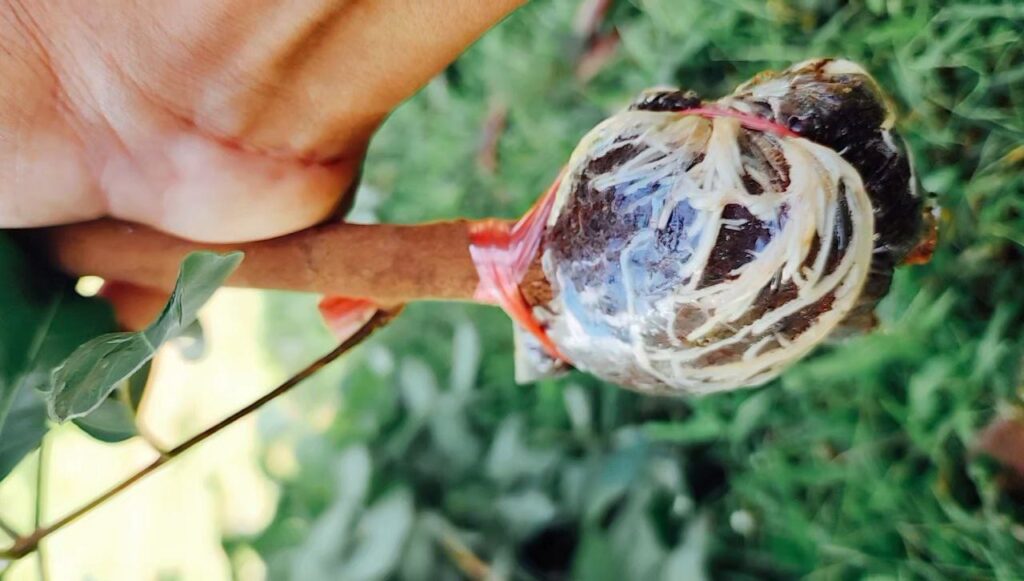
Keep the layered branch slightly shaded and check occasionally to ensure the cocopeat remains moist. Avoid direct rain or strong sunlight. After about 35 days, you’ll notice white roots sprouting inside the cocopeat — a clear sign of success.
Step 7: Cutting and Planting
Once the roots are well-developed and visible around the bag, cut below the rooted section using clean pruning shears. Carefully remove the plastic, keeping the cocopeat intact around the roots. Transplant the new longan plant into a pot or directly into the ground, and keep it shaded for about a week before exposing it to full sun.
🌿 Pro Tips for Higher Success:
Use fresh cocopeat that’s not too wet or too dry.
Always use clean tools to avoid infection.
Apply a fungicide spray to the wound area before wrapping if the weather is very humid.
Avoid layering during heavy rainy periods — the excess moisture can cause rot.