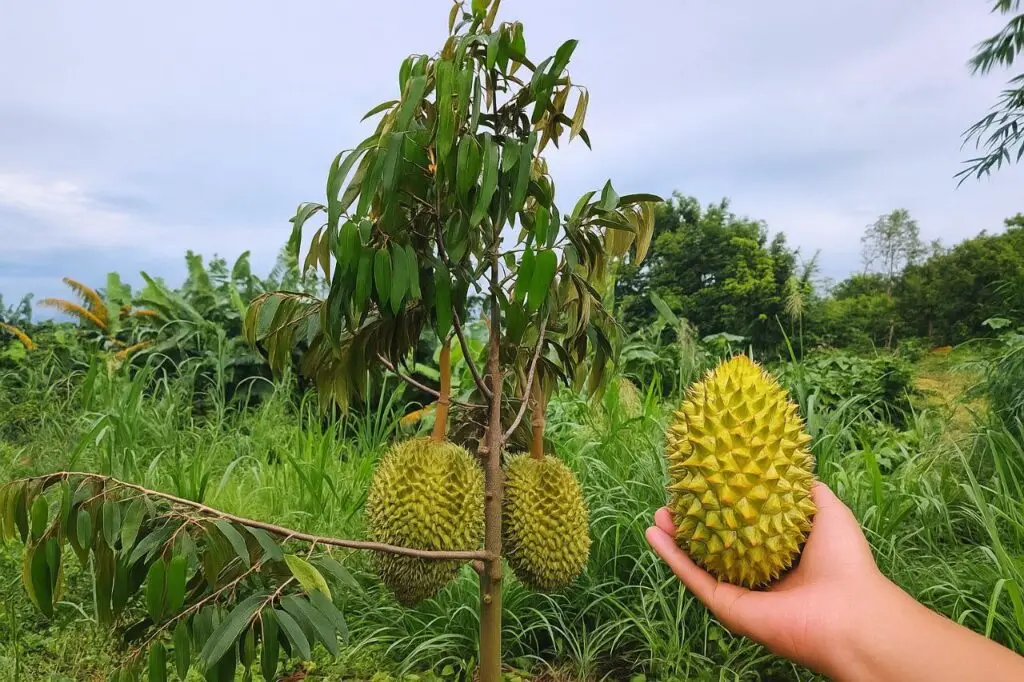
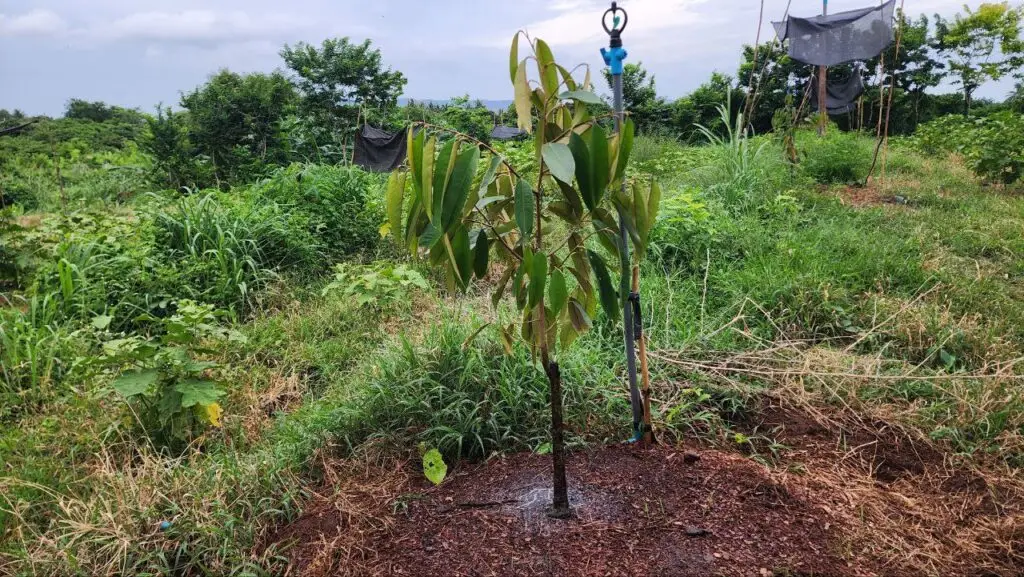
The proper use of fish amino acid on durian supports healthy growth and better disease prevention. Although many farmers already use this method, few apply it correctly. Therefore, understanding the right way to prepare and spray FAA can improve results.
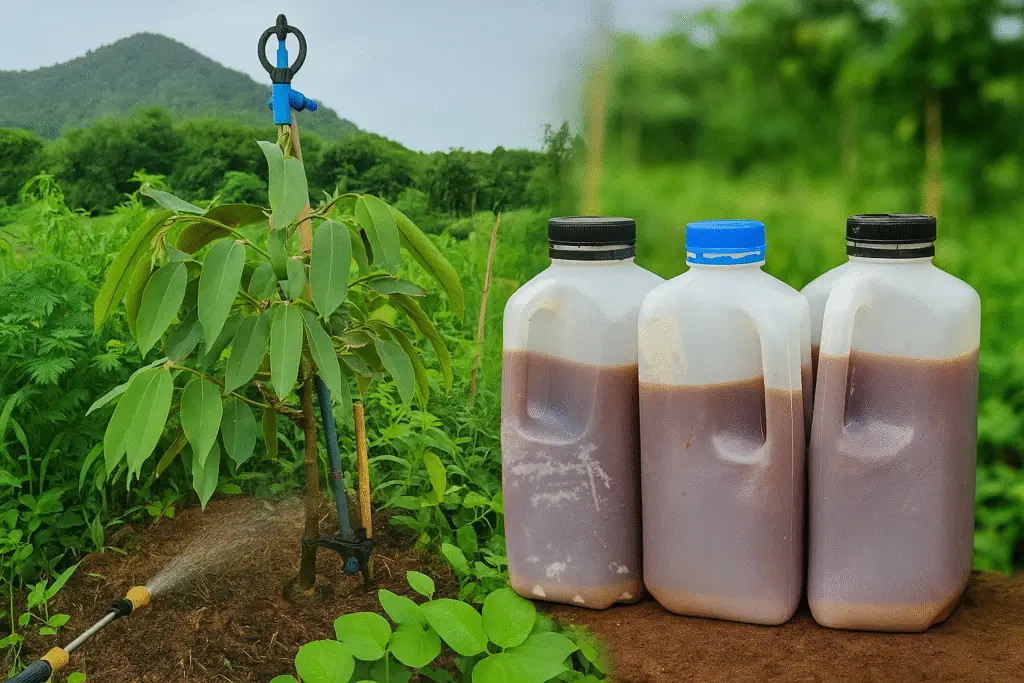
Moreover, fish amino acid (FAA) is made by fermenting sea fish with molasses, pineapple, and fermented fruit juice (FFJ). As a result, it becomes rich in nutrients and beneficial microbes. When applied properly, it helps young durian trees grow faster and resist stress.
✅ How to Apply Fish Amino Acid on Durian Trees
To begin, mix 50 ml of FAA with 1 liter of clean water. Next, add 0.5 to 1 ml of surfactant. This blend ensures the fish oil mixes well with water. Otherwise, the oil may float and reduce spray coverage.
Then, spray the solution onto the canopy and stump of baby durian trees. For best results, apply it in the early morning or late afternoon, when temperatures are cooler. During these times, plants absorb nutrients more effectively. Therefore, spraying at the right time makes a big difference.
In addition, repeat the application every 10 to 14 days. That way, the durian trees receive a steady supply of nutrients during the growing season.
✅ Why Fish Amino Acid Works
Fish amino acid is full of amino acids, trace minerals, and enzymes. Because of this, it supports leaf growth, root strength, and overall health. Besides feeding the plant, FAA also contains fish oil, which adds another layer of benefit.
Specifically, fish oil forms a thin, water-repellent film on the leaves and stump. This coating may prevent fungal spores from sticking and germinating. As a result, the plant becomes less likely to develop fungal problems.
However, it’s important to understand that FAA is not a fungicide. It does not kill fungi. Instead, it acts as a physical barrier, which can slow down the spread of fungal spores.
✅ Role of Surfactants in FAA Sprays
Although FAA is effective, the oil content does not blend naturally with water. This is where a surfactant becomes important. By adding a small amount—just 0.5 to 1 ml per liter—the oil and water can mix evenly.
In this way, the entire plant receives a more uniform coating. As a result, both nutrients and microbes reach every leaf surface. Furthermore, at this low dosage, surfactants do not harm beneficial microbes in the FAA.
👉 Learn more about surfactants in foliar sprays
✅ Limitations: FAA Is Not a Cure
Even though FAA can reduce fungal risks, it does not cure infections. Therefore, if a tree already shows signs of fungal disease, FAA alone is not enough. In that case, you must use a chemical fungicide such as:
Mancozeb
Metalaxyl
Azoxystrobin
These products kill fungi directly. Meanwhile, FAA is only useful as a preventive spray, not a treatment.
👉 Study: Fungicides effective for durian
✅ FAA for Organic and GAP Farming
Fortunately, the proper use of fish amino acid on durian fits well into organic and GAP systems. Since FAA is made from natural materials, it is safe and eco-friendly. In fact, it can reduce your need for synthetic fertilizers or pesticides.
Additionally, it improves soil life and plant resistance. When used regularly, FAA helps support:
Stronger leaf and root development
Better disease resistance
Healthier microbial activity
Sustainable durian production
Because of these benefits, more farmers are now using FAA in their durian care programs.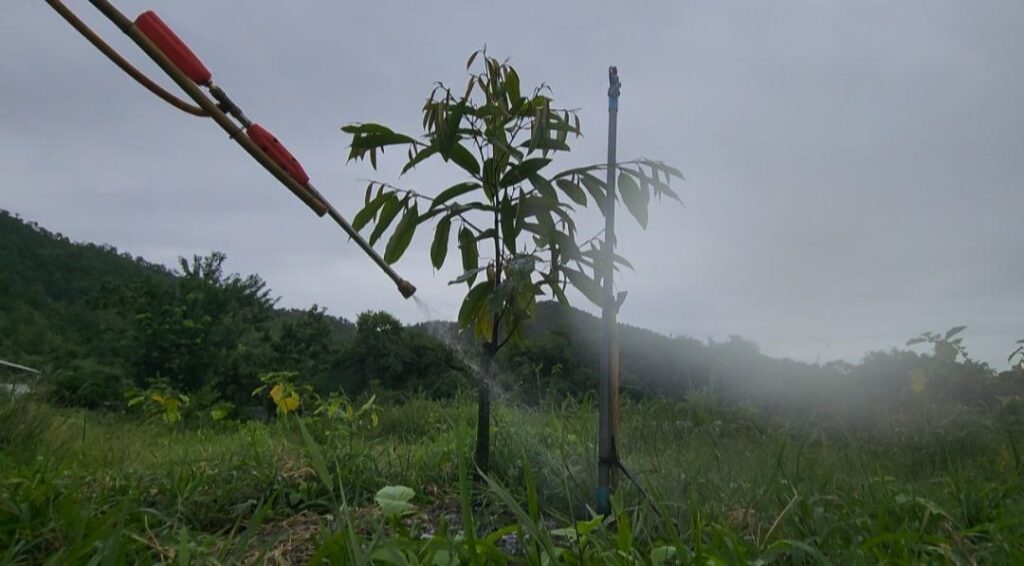
✅ Conclusion
To sum up, the proper use of fish amino acid on durian offers many benefits. It feeds the plant, improves soil microbes, and helps defend against fungal spores. When used with a surfactant, it spreads better and works more efficiently.
Although FAA is not a cure for diseases, it plays a key role in prevention. Therefore, if you want to grow healthy durian trees naturally, FAA is a smart choice.